Employees of the Company

Employees are valuable resources for GPSC and serve as an important mechanism to drive business growth and enable it to meet its goals. As such, GPSC is committed to human resource management in accordance with the corporate strategy. Human resource management policies and guidelines are as follows:

Guidelines for Employee Capacity Development and Employee Care

GRI 3-3
Human Resource Management Policy

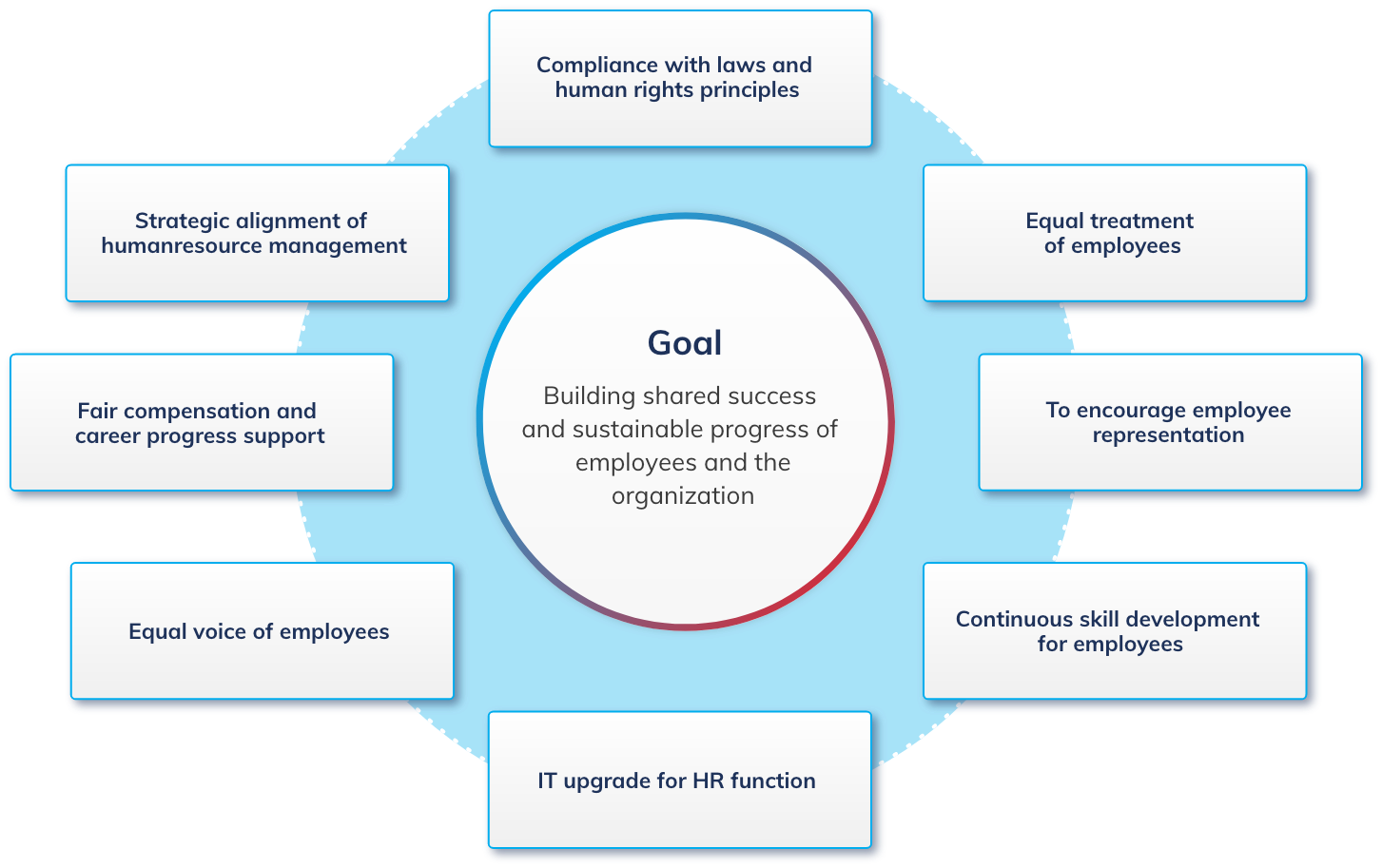
GPSC enforces a HR management policy to steer its HR management effectively in alignment with its strategies and goals. The HR management policy ensures sustainable and mutual success and advancement of both employees and the organization.

Human Resource Management Policy

The objective of HR management is to support GPSC’s growth trajectory in accordance with the 4S Strategy, utilizing various management mechanisms, including personnel capability development and the improvement of work systems and processes as well as the fostering of values and a work culture that contribute to the achievement of the established targets. HR management consists of four key action plans as detailed below.

Personnel Capability Development
Leadership Development for Personnel and Executives
Promotion of Corporate Value and Culture for Employee Engagement Strengthening
HR Workflow Improvement

Personnel Capability Development

  • Improve processes, mechanisms, and tools for recruiting and selecting people in line with the needs specified in the organization’s business growth plan, both domestic and abroad; meet the needs of talents with specialized expertise for GPSC’s new business; and improve employer branding to broaden awareness and attract more talents to the organization.
  • Create a talent development program to support national and international business growth and promote GPSC’s new business development plans, such as renewable energy power plants, battery plants, and the development of electrical and battery containment systems

Leadership Development for Personnel and Executives

  • Formulate employee competency development plans and develop courses in line with the established competencies, such as core competencies, functional competencies, and technical competencies, in order to enhance employee competencies properly and in alignment with GPSC’s operational direction.
  • Develop succession plans, in which talents are recruited and selected to undergo capability assessment and development guidelines are formulated in order to ensure GPSC is prepared to replace key executive positions in anticipation of retirement and business expansion in the future.

Promotion of Corporate Value and Culture for Employee Engagement Strengthening

  • Focus on strengthening engagement in the organization by using the “ACT SPIRIT” values to cultivate an organizational culture by using HR systems and mechanisms as well as activities to create the desired work behavior for employees in the organization, and focus on effective internal communication to ensure mutual understanding between management and employees for further satisfaction and engagement in the organization.

HR Workflow Improvement

  • Review and improve HR work processes to align with business practices, with emphasis on three main areas: Performance Management System, Strategic Workforce Planning Strategy, and Organization Restructuring
  • Improve HR processes to better support the business direction of overseas organizations by creating platforms and systems that support future new business models.

Employee capability development is vital to the enhancement of the organization's competitiveness, especially in the midst of the ongoing changes in the electricity industry. GPSC recognizes the significance of equipping employees with necessary knowledge and skills in line with the business direction and has thus established clear employee development guidelines that place operational alignment at the core of its employee development program.

Employee Development Programs 2024

Succession Plan

GPSC has developed succession management strategies, formulated succession plans for critical positions covering high- and mid-level executives, and prepared its high-potential executives to ensure business continuity in the event of vacancy/job rotation or retirement. The goal is to develop succession plans for 100% of the critical positions. For employees at other levels, GPSC also develops a career path so that each individual employee can take part in determining their own career advancement in order to foster sustainable and mutual success and advancement of both employees and the organization. Succession planning for critical positions consist of four key steps as follows:

Formulation of success profiles for critical positions

Grouping of potential executives for key management positions

Assessment of potential executives through the Assessment Center, encompassing competency, interpersonal skills, business/ management, and personal attributes

Application of assessment results to determine individual development plans (IDP)

GRI 404-2

As building new S-curve businesses is one of GPSC’s core strategies, the development of future leaders with necessary skills is vital. In 2021, GPSC initiated the SPARK Accelerator Management Trainee Program, which is a future leader development program of GPSC Group, the innovation leader of PTT Group’s electricity business. The objective is to enhance leadership potential for employees and external parties through diverse learning mechanisms and challenges both domestically and abroad. Participants will have an opportunity to be rotated to three key operational components over a period of three years, namely Corporate strategy and Investment Management, business development, commerce, financial management and operations.

SPARK Accelerator Management Trainee Program

Objective : To select employees or external individuals to learn about GPSC’s business operations through job rotations, mentorship with experts in each line of work, as well as leadership and business development programs.

Number of participants in 2025 : 2

Number of participants since the project began : 12

Benefits :

  1. Participants in the project will have the opportunity to rotate through 5 key positions within the company over a 3-year period to prepare for future leadership roles.
  2. Employees will actively engage in projects of importance within their respective departments, with the support of mentors to guide them along the way.
  3. Employees will have the chance to learn about business practices in target countries, aiming to seek opportunities for business expansion.

Timeframe : 3 years per batch

GRI 404-2

To accelerate the competency development of operations employees and enhance the confidence in the reliability of its electricity production and distribution, GPSC has developed a technical competency management project for operations personnel, with an integrated and systematic management approach under the key competence management project. The details are as follows:

Competency assurance: Technical competency profiles are formulated, detailing the capability requirements of operations personnel, such as operations staff, engineers, and technicians, in accordance with professional areas and positions.

Competency assessment: GPSC Group conducts technical competency assessment using a system that meets relevant standards. Staff and supervisors can track reports and view their assessment results in the competency management system (CMS).

Assessment results are used to determine individual development plans (IDPs) for employees in the CMS.

An IDP consists of various forms of learning, such as e-learning, classroom-based learning, coaching and mentoring, and experiential learning, to maximize learning effectiveness.

A progress monitoring plan is clearly defined, with competency assessment conducted every six months to track the progress of the IDP and reduce competency gaps from the previous assessment.

GRI 404-2

GPSC utilizes learning management system (LMS) software, which manages its library of over 100 e-learning courses covering various fields such as business, technology, and finance. Such courses are accessible to employees at any time and from anywhere via the iSPARK website and application. Thanks to the LMS, GPSC has been able to reduce training costs as well as relevant expenses, such as transportation, food, training venues, and accommodations. In 2023, GPSC successfully reduced an estimated 8.35 million baht in costs based on the training of a total of 1,104 employees (100% of GPSC’s employees). The LMS is composed of five functions as detailed below.

Course management system: This component consists of classroom-based learning and e-learning courses, and users are categorized into three groups: learners, instructors, and administrators. The system is accessible at any time and from any location.

Content management system: This component consists of content creation tools whose functions are suitable for text-based lessons, videos, and infographics.

Test and evaluation system: This component consists of an exam inventory and a course-by-course evaluation system.

Course tools: This component consists of various tools for the communication between GPSC, learners, and instructors on the news feed.

Data management system: This component records learner data and generates training reports.

Human Capital Development
Course Objective Percentage of employees trained in 2024
Core Programs Designed specifically for employees at each job level, these special programs include the Intensive Development Program, which focuses on enhancing personal skills and capabilities with regard to knowledge, strategic thinking, and time management; the Team Management Program, aimed at enabling employees to manage teams effectively through communication, teamwork, and collaborative problem-solving; and the Leadership Development Program, designed to strengthen leadership skills, such as decision-making, motivating people, and change management. These programs ensure employees can develop appropriate capabilities for each job level and grow steadily in their careers.
  • 247 employees participated
  • Satisfaction survey result: 96%
Future Energy Program Aimed at developing personnel in line with GPSC’s strategic focus on renewable energy businesses as part of achieving sustainable development goals, this program enhances knowledge of eco-friendly technologies and practices and develops essential skills for adapting to the modern energy industry. The program also fosters employee awareness about decarbonization in the energy industry through workshops, industry case studies, and idea exchanges, thus enabling employees to apply these concepts to their work effectively.
  • 107 employees participated
GPSC Leadership Mastery Program This program seeks to enhance knowledge, understanding, and awareness of regulatory compliance to strengthen good corporate governance as well as the authority set forth in the Table of Authority (TOA) for executives and VP/DM-level employees. Through workshops, case study analysis, and in-depth exchanges with experts, participants learn about their roles in preventing, detecting, examining, and responding to misconduct or fraud risks. The program also focuses on enabling participants to effectively apply this knowledge to their subordinates to promote an organizational culture of transparency and good corporate governance and reduce ethical risks in operational processes.
  • 35 employees participated
  • Satisfaction survey result: 91%
GPSC Data Revolution Bootcamp This bootcamp was designed to strengthen foundational skills for accurate data analysis through in-depth learning and hands-on practices under close supervision by experts. The intensive 3-month program covered six main topics, including Essential Data Analytics, Visual Data Analytics, and Storytelling with Data.

The program also featured clinic sessions, where participants were given an opportunity to gain real-world experience, develop data presentation skills with personalized feedback, create frameworks for precise business problem analysis, and practice using dashboards and efficient data visualization techniques that they would be able to confidently apply to their work.
  • 30 employees participated
  • Satisfaction survey result: 96%

GPSC has adopted qualitative and quantitative data analytics to develop guidelines for maintaining and attracting talents. The analytics encompasses seven areas of HR operations as detailed below.

Measuring Employee Performance

Employee performance is measured with a performance management system (PMS). GPSC assesses the performance of its personnel in order to drive the organizational performance towards achieving its goals and foster continuous development. Employee performance assessment consists of behavioral assessment and key performance indicator (KPI) assessment. All employees are required to establish individual indicators that align with the organization’s strategies and objectives. The assessment outcomes are utilized to identify suitable career development paths for employees in the short and long term and to inform the adjustment of compensation and promotion in accordance with employee performance.

Recruiting & Hiring

GPSC reviews the qualitative data of its candidates by inspecting the alignment between their work experience and educational background and the open position and by administering aptitude tests, core-value tests, and personality tests before the structured interview based on the results of job analysis in order to select competent candidates in line with GPSC’s guidelines. All data and processes related to employee recruitment and selection are recorded on the company’s e-Recruit system for transparency and accountability.

Identifying Flight Risks to Improve Retention

GPSC analyzes flight risks by conducting employee engagement surveys and employee experience surveys under the Mercer Model in order to identify key factors and initiate projects that contribute to employee retention. In addition, GPSC carries out exit interviews. This step involves a questionnaire and an interview by HR executives and presents an opportunity for the organization to listen to and interview employees upon their resignation, so that the comments obtained can be used to improve and develop guidelines for enhancing employee satisfaction and engagement.

Competitive Intelligence

The Company has conducted surveys and developed a comprehensive database of compensation and employment, which includes both quantitative and qualitative data on employee salary ranges and bonuses as well as on employment trends within the same business group, both domestically and internationally. The data is continuously collected from various sources, such as national compensation surveys and online platforms related to compensation and job applications. This data is utilized to adjust employee remuneration to maintain competitiveness in the labor market as well as to attract and retain individuals with competencies aligning with the organization’s objectives.

Organizational Network Analysis

GPSC has developed an organization-wide interaction network that shows interaction intensity between units and between individuals across its supply chain to identify personnel with excessive workload, support cooperation within the organization, and elevate operations across functions, all of which are factors that impact employee flight risks and the work environment.

Strategic Workforce Planning

GPSC prepares its workforce in support of its 4S Strategy (Strengthen and Expand the Core, Scale up Green Energy, S-curve and Batteries, and Shift to Customer-centric Solutions) under the Korn Ferry Six Rights Framework, which consists of Right Skills, Right Shape, Right Size, Right Site, Right Spend, and Right Source. Relevant data, both quantitative and qualitative, is also collected.

Identifying Skills Gaps

GPSC conducts assessment of skill gaps that are vital to the achievement of the 4S Strategy. As part of the assessment, supervisors and employees discuss and work together to determine goals and indicators as well as action plans/assistance needed in order to successfully implement such plans. In addition, they discuss the application of core values to their job, formulate individual development plans (IDPs), and input the data into the performance assessment system in order to establish operational goals. Supervisors and employees are also required to consult each other during the performance and IDP assessment.

  • Employee performance against the established KPIs
  • Achievements and obstacles where employees may require assistance
  • IDP progress tracking
GRI 404-2

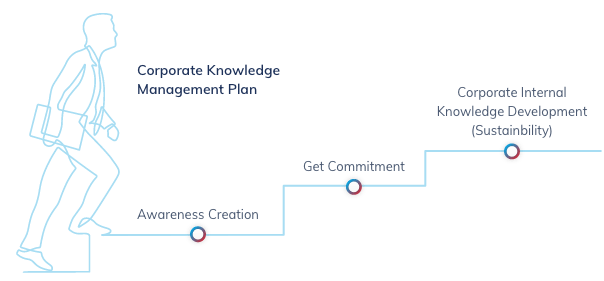
Organizational knowledge management contributes to the development of knowledge and skills for effective performance of duties as well as promotes the development and application of knowledge to support GPSC’s vision and goals of reducing risks and fostering competitive excellence. To this end, GPSC promotes knowledge sharing between organizations and has cultivated a self-learning culture by developing the Knowledge Management Portal, which operates according to the internal knowledge management plan as directed by the operating guidelines of PTT Group’s Knowledge Management Committee. (PTT Group KM Committee)

GRI 404-2

GPSC recognizes the importance of preparing employees close to the retirement age to ensure that they have good financial plans for retirement. To this end, it has developed relevant courses, including Retirement Financial Planning, Personal Financial Planning, and Personal Balance Sheet & Key Financial Ratios available online via the iSPARK system,

In addition, GPSC organized a retirement preparation seminar for retiring employees as well as interested staff. The objective was to provide participants with knowledge and understanding on topics such as personal income tax, financial planning, and money management. This initiative aims to help employees plan their finances to ensure sufficient funds for life after retirement, when regular income from the company ceases. The program also focuses on preparing employees for a balanced post-retirement life—physically and mentally—while fostering a positive mindset for this new phase of life.

GPSC provides legally-mandated compensation to retired employees and has established a provident fund, which is beyond legal requirements, made through deductions from employee salaries and additional contributions from the Company, to serve as a savings plan for employees in the event of employment termination or retirement. The Company collaborates with mutual funds specializing in managing returns on these savings and provides a range of investment policies, which employees can choose from voluntarily based on their individual suitability and risk-reward preferences.

GRI 2-30, 407-1

Labour Practice Commitment

GPSC is committed to labor practices and human resource management in accordance with the corporate strategy, covering GPSC own operation, suppliers, contractors, and partners. The focus topics include:

  1. Employee wage in proportion to the living wage, with consideration of benchmarking and equal remuneration for men and women;
  2. Working hours management (e.g., setting maximum working hours) aiming to reduce or avoid unnecessary excessive working hours;
  3. Paying employees annual leave; and
  4. Notice periods before companies’ major events (e.g., terminations).

Labor Practice Programs

  • Employee Remuneration: GPSC considers living wage, peer benchmarking results, and equal remuneration between male and female employees. From the annual data collection, the human resource function re-evaluates employee wages every year to ensure sufficiency and justices.
  • Working Condition: For work hours, GPSC monitors employees’ working hours, including overtime work and setting maximum work hours, by line managers. Via the intranet, GPSC provides all employees with working hours standards that ensure employees are paid for their overtime work.
  • Paid Leave: All GPSC employees are entitled to take paid annual leave up to 15 days per year, depending on employee years of work with GPSC. Employees can accumulate their annual leave up to 15 days per year (depending on the year of service).
  • Social Protection: GPSC provides social protection to employees. The social protection goes beyond governmental programs including life and health insurance, annual health check-ups, mental health programs, a provident fund, educational scholarships for employees’ children, vacation days exceeding the legal minimum, and flexible working policies, among others.
  • Welfare Committee: The Human Resources and Organization Development function welcomes all employees' concerns regarding working conditions, via engagement with the welfare committee, employee focus group meetings, and corporate grievance mechanisms.
  • Upskilling Employee: GPSC provides training for employees that are in line with corporate needs such as Climate Change Transitioning, the Future Energy Program and Beyond Energy Series, as well as foundational and advanced data analytics skills through programs like the GPSC Data Revolution Bootcamp.

Employee engagement is one of the drivers enabling GPSC to achieve its goals and enhances the positive image of the company. As such, GPSC has prescribed employee engagement surveys conducted annually by an external agency. The survey results are used to develop programs to enhance employee retention and promote employee engagement. The steps involved are as follows:

  • Administer the survey questionnaire.
  • Process the survey results.
  • Present the results to executives.
  • Development action plans for enhancing employee retention and promoting employee engagement.

GPSC has a strategy to create a positive experience for employees to foster organizational loyalty. This includes promoting the company's image and reputation to increase external recognition, developing employees through the GPSC Academy, and providing opportunities to work on new business ventures abroad.

GPSC Employee Wellbeing Survey 2024
GRI 2-30

GPSC Group annually assesses its remuneration scheme and employee benefits to ensure that the compensation and benefits offered are appropriate and remain competitive within the industry. The compensation and benefits provided to regular employees include salaries, bonuses, contributions to the provident fund, life insurance, and medical expenses, among others.

Employee Benefits

Workplace Stress Management

GPSC offers an online mental health program with professional psychologists to reduce employee stress levels. Employees can book appointments with professional psychologists to discuss work-related issues and personal problems.

GPSC Employee Support Programs
Sport & Health initiatives: Health Check Analysis

In 2024, GPSC collaborated with a private hospital to organize the "Health Checkup Analysis" program to enhance the health of all employees. This initiative provides health checkups for all employees, and their health data will be collected and analyzed to develop sports and health programs tailored to their needs, promoting overall well-being.

In 2024, the company found that 116 employees were at risk of stroke (ranging from low to moderate to high risk), and it is projected that in the next 2 years, there will be 48 employees at risk of stroke. Based on this data, GPSC initiated a health and sports promotion program, including the establishment of an employee sports club, to enhance the health of its personnel.

GPSC has a "Employee Sports Club," which is one of the health and sports promotion activities aimed at enhancing the health of employees. This project financially supports employees to establish their own sports clubs. Currently, the project has been successful in helping to establish over 19 clubs, covering various sports and activities including badminton, basketball, and snooker. Over 500 employees, which accounts for 46% of the total workforce, participate in these activities.

Work Conditions

GPSC have the regulation for Flexible working hours announced to all employees to suit their different lifestyle. To support the time attendance process, we have D-Time application for employee to be easier.

Work-from-Home Arrangement

GPSC has a policy that allows employees whose job nature meets certain criteria to work remotely from any location. This policy specifies the criteria for suitable job nature for remote work and permits employees whose job nature meets these criteria to work from any location, up to a maximum of once per week.

Family Benefits

Childcare Facilities

GPSC employees are allow to use the PTT Group DayCare service, which is the childcare facilities for rearing, lactation, playground, and more. The facility is located nearby the GPSC Office. For more information please see https://pttdaycare.com

Paid Parental Leave: Primary caregivers

The primary caregiver can take maternity leave for 98 days and will be paid for 90 days. Thai national law requires the minimum of 45 days of paid parental leave. That is, GPSC allows the primary caregivers to take paid parental leave in excess of the Thai national law by 45 days. After taking maternity leave period, they can take more unpaid leave to look after their child but not more than 150 days.

Paid Parental Leave: Non-primary caregivers

The non-primary caregiver can take paid paternal leave for 15 days to support primary caregivers.

Paid Family Leave

GPSC provides paid family leave to employees in a form of personal leave. This leave is a paid leave that GPSC employees can take to take care for their child, spouse, partners, parent, sibling, or others designated relation with a physical or mental health condition GPSC employees allow to take personal leave up to 10 days.

GPSC Long-Term Incentives for Employees Download

GPSC Group supports employment without discrimination against individuals from diverse backgrounds as well as embraces and values the importance of individual differences in terms of race, gender, religion, socio-economic status, age, place of origin, education, and physical abilities. GPSC recognizes that the diversity of its human resources will help the company creatively respond to different customer needs and changes in the nature of business, sustainably contributing benefits to the company.

Updated as of February 2025

The content above is based on the sustainability reporting standards of the Global Reporting Initiative (GRI Standards) and externally validated and verified for data accuracy at the "Limited Assurance" level.