• Home
  • Data Privacy
  • Whistleblowing Measures
  • Procurement
  • Contact
  • Home
  • About Us

    GLOBAL BEST PRACTICE IN POWER BUSINESS
    • Corporate Info
      • Vision & Mission
      • Corporate Value
    • Milestone
    • Our Logo
    • Shareholder Structure
    • Management Structure
      • Organization Chart
      • Board of Directors
      • The Audit Committee
      • The Nomination and Remuneration Committee
      • The Risk Management Committee
      • The Corporate Governance and Sustainability Committee
      • Executive Team
    • Subsidiary and Associated Companies
    • Awards & Recognitions
    • EIA Reports
    VISION & MISSION
    BOARD OF DIRECTORS
  • Our Business

    GLOBAL BEST PRACTICE IN POWER BUSINESS
    • Business Portfolio
    • Combine Cycle / Cogeneration / Thermal
    • Renewable Energy
    • Other Business
  • Sustainability

    GLOBAL BEST PRACTICE IN POWER BUSINESS

    • Reporting
      • SD Report
      • Sustainability Performance Data
    • GPSC Sustainability
      • GPSC Sustainability Strategy and SDGs
      • Materiality Assessment
      • Corporate Sustainability Management Structure
      • Sustainability Framework
    • Economic
      • Governance, Risk Management and Compliance
      • Supply Chain Management
      • Evolving Business Model
      • Maintaining Availability and Reliability
      • Contribution to Associations
      • Tax Disclosure
    • Environmental
      • Environmental Management
      • Clean Energy Towards Net Zero
      • Biodiversity
    • Social
      • Corporate Social Responsibility
      • Employee-Focused Organization
      • Occupational Health and Safety
      • Human Rights
      • Customer Relationship Management
    • Stakeholder Engagement
    • Policy
    STAKEHOLDER ENGAEMENT
    Stakeholder Engagement
    SD REPORT
    SD Report
  • Investor Relations

    GLOBAL BEST PRACTICE IN POWER BUSINESS

    • IR Home
    • Financial Information
      • Financial Highlights
      • Financial Statements
      • MD & A
      • Credit Rating
    • Stock Information
      • Stock Quotes
      • Historical Price
      • Investment Calculator
    • Shareholder Information
      • General Information
      • Shareholder Structure
      • Shareholders' Meeting
      • Download Rights Offering Package
      • GPSC’S Site Visit
      • Dividend Policy & Payment
      • IR Calendar
    • Debenture Information
      • Debenture Information
      • Green Debenture Information NO.1/2020
      • Green Debenture Information NO.1/2022
    • Newsroom
      • SET Announcements
      • Press Releases
      • News Clippings
    • IR Calendar
    • Presentation & Webcasts
    • Analyst Coverage
      • Analyst Contact
      • Analyst Reports
    • Publication & Download
      • 56-1 One Report / Annual Report
      • Form 56-1
      • Factsheet
      • Prospectus
      • Quick Download
    • Information Inquiry & IR contact
      • IR Contact
      • Email Alert
      • FAQ
    STOCK QUOTE
    Stakeholder Engagement
    FINANCIAL STATEMENTS
    SD Report
  • News & Media

    GLOBAL BEST PRACTICE IN POWER BUSINESS

    • News
      • PR News
      • CSR News
    • Videos
      • Corporate Video
      • Project Videos
      • News Scoop
      • Knowledge Sharing
    • Energy Knowledge
  • Corporate Governance

    GLOBAL BEST PRACTICE IN POWER BUSINESS

    • Good Coporate Governance Policy and Code of Conduct
    • Internal Audit
    • Whistleblowing Measures
    • Contact Company Secretary
    • GPSC Group Way of Conduct Manual
  • Career
  • Contact Us
  • Data Privacy
Font
A+
A
Dark mode Light mode
Quick links
whistleblowing Procurement
Language :
  • TH
  • EN
Recommended Searches
  • Energy forecast
  • Careers
  • Annual Report
  • Energy Storage System
Quick links
whistleblowing Procurement
  • A+
    Increase Font
  • A
    Regular Font
  • Dark mode Light mode
  • TH
Back

Solar Energy

11 Jan 2023

What is Solar Energy?

Solar energy is a form of renewable energy that originates from nature. It is a clean and sustainable source of energy that can be utilized indefinitely without causing pollution or environmental harm. Solar energy offers various benefits and can be harnessed for multiple purposes. The sun's radiation provides both light energy and heat energy, which can be employed in generating electricity and heat.

Solar Technology for Heat Generation

Solar heating, also known as heat generation from solar energy, involves directly utilizing the heat from sunlight. The principles of heat production from solar energy are incorporated into various technologies, such as solar hot water systems, solar drying cabinets, and solar stoves.

In the technology of producing hot water with solar energy, the principle is simple: using black paint on pipes to make them opaque and absorb solar energy, thereby generating heat. This heat is then converted into hot water, which can be used for various purposes, whether in households or factories. Similarly, solar drying cabinets operate on the same principle, allowing sunlight to shine through black-painted cabinets to absorb light and facilitate drying. Solar furnaces rely on the principle of concentrating sunlight onto a focal point in a parabolic container, creating high temperatures that can be used for cooking.

Solar Technology for Electricity Generation

One popular method of generating electricity from the sun is through the conversion of light energy obtained from solar radiation using the photovoltaic method. This method involves directly converting solar energy into electrical energy using solar cells, also referred to as photovoltaic cells.

Photovoltaics, invented by Charles Fritts in 1883, converts solar energy into electricity through solar cells. The term "photovoltaic" derives from the combination of "photo," meaning "light," and "volt," meaning "voltage." It describes the phenomenon in which light energy is converted into electrical energy.

Working Principles of Photovoltaic Cell or Solar Cell

A solar cell, also known as a PV (Photovoltaic) cell, is a device that directly converts sunlight into electricity. The working principle involves sunlight containing photons, which are particles of solar energy. These photons possess varying amounts of energy corresponding to different wavelengths in the light spectrum.

Solar cells are made from semiconductor materials. When sunlight hits a solar cell, the semiconductor can reflect, transmit, or absorb the sunlight. Only the photons absorbed by the semiconductor can be utilized to generate electricity. Sufficient absorption of sunlight or solar energy causes electrons from the valence band to move into the conduction band, resulting in the conductivity of the semiconductor.

Silicon is the most commonly used semiconductor material for solar cells due to its abundance, cost-effectiveness, and efficiency. Other types of solar cells include thin-film solar cells, organic solar cells, and dye-sensitized solar cells.

Equipment Used for Electricity Generation

  • Solar Panels (Solar Modules):

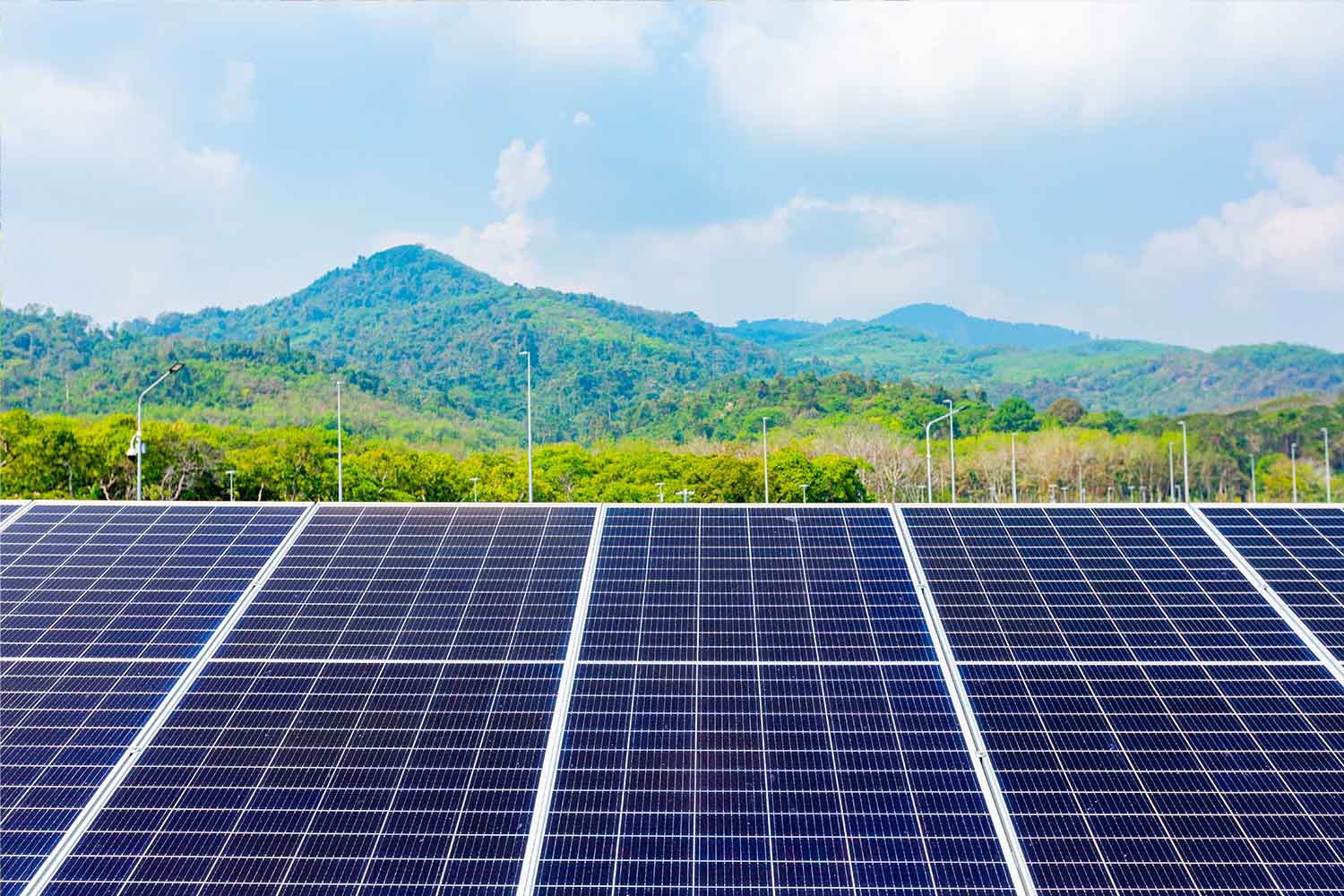
    Solar panels are electronic devices that convert solar energy into electrical energy through the photovoltaic effect. A single solar cell produces a small amount of electricity (around 1-2 watts). Therefore, multiple solar cells are combined to form a solar panel, which enhances the efficiency of electricity generation.

  • Charge Controller:

    The charge controller regulates the flow of electric charge produced by the solar panel into the battery. It ensures the appropriate supply of electricity to prevent damage and prolong the battery's lifespan.

  • Battery:

    Batteries serve as a storage mechanism for the electricity generated by solar panels. They collect and store electricity for later use when there is no sunlight or during nighttime. Various types and sizes of batteries are available to suit specific requirements.

  • Power Inverter:

    The power inverter converts the direct current (DC) generated by solar panels into alternating current (AC), making it compatible with devices that use AC power.

  • Lightning Protection:

    Lightning protection measures are often implemented for large-scale solar projects to safeguard electrical equipment from damage during lightning strikes. These measures work in conjunction with an effective grounding system.

Advantages of Solar Energy

  • Solar energy is an inexhaustible source of clean energy that is readily available in areas with direct sunlight, making it a sustainable and abundant resource.
  • Solar energy offers multiple benefits as it can be used directly or converted into electricity or thermal energy without causing any harmful impact on the environment.
  • It is a versatile energy source that can be utilized for electricity generation, ranging from small-scale applications like powering calculators to large-scale power plants.
  • By installing solar panels on rooftops, households can generate their own electricity, leading to significant savings on electricity bills. Moreover, surplus energy can be sold back to the government or entrepreneurs, providing an additional source of income.
  • Solar energy systems have low maintenance costs. They are durable and typically last for 20-25 years, requiring minimal maintenance

Limitations of Solar Energy

  • Weather affects the amount of sunlight, making power generation from solar cells uneven.
  • It is not popular to distribute electricity generated by solar cells to areas farther than the production base. Because there are limitations in many aspects, such as requiring a long time and a large budget, etc.
  • If you need a lot of energy It is necessary to use a large number of solar panels. large installation space Including a large budget as well
  • In the future, solar panels will become a huge amount of e-waste that must be disposed of at the end of their life.

Solar power plants in the GPSC Group

The GPSC Group, which is the innovative power and smart energy flagship of the PTT Group, focuses on the production and distribution of electricity, steam, industrial water, and other public utilities. They also strive to develop renewable energy and expand into new business sectors in the New S-Curve industry, aiming to meet the future's sustainable quality of life.

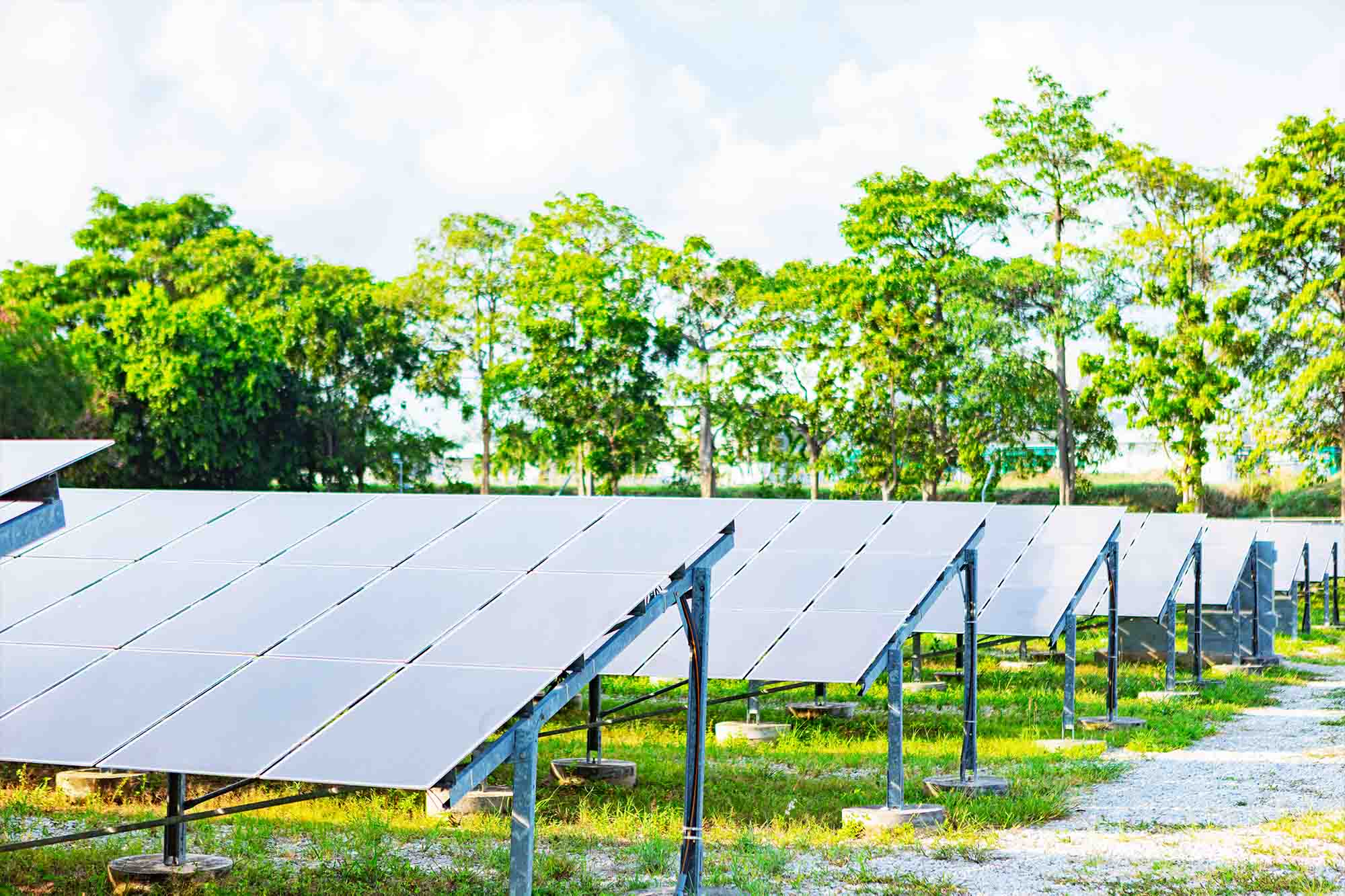
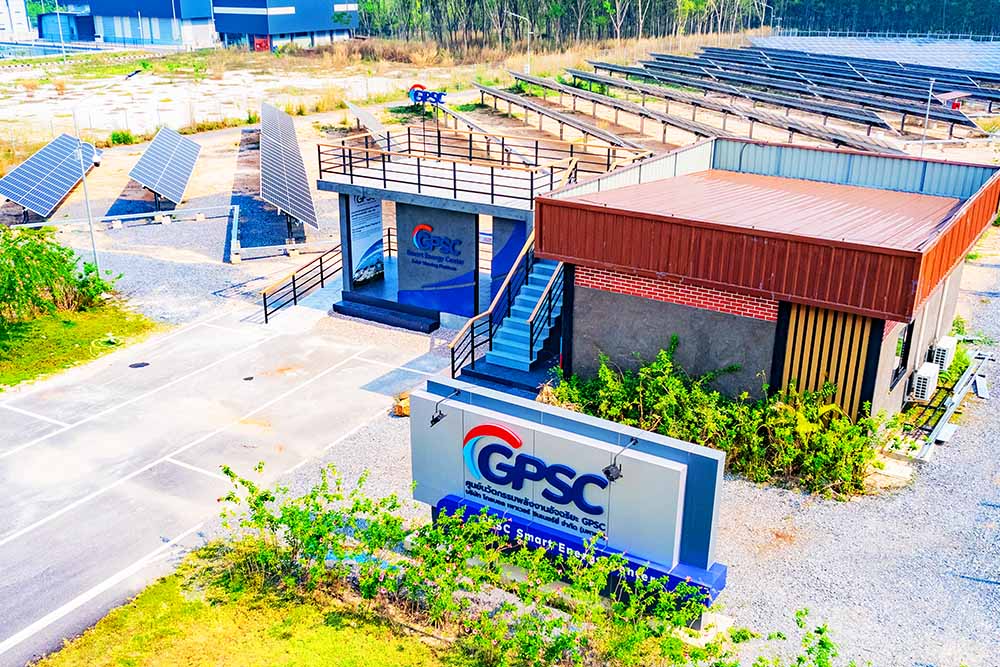
GPSC's solar power plants play a significant role in producing electricity for sale. They generate and distribute electricity to the Provincial Electricity Authority (PEA), private companies, agricultural cooperatives, and businesses both in Thailand and abroad. These solar power plants can be categorized into two main types: roof-installed systems and ground-installed systems. The primary raw material used in electricity generation is sunlight, which depends on factors such as location, terrain, and climate.

Exploring GPSC Group's Domestic and International Solar

The GPSC Group operates solar power plants domestically and internationally, with a focus on renewable energy to reduce carbon dioxide emissions and contribute to society. The company is determined to continue operating in an environmentally friendly manner, working towards achieving a real net-zero impact on society. Here are some projects and companies supervised by GPSC, both in Thailand and abroad:

  • Global Renewable Power Company Limited (GRP)
  • Thai Solar Renewable Company Limited
  • Combined Electricity and Power Generating Company Limited
  • Glow Energy Solar rooftop plant (Project 1)
  • Glow Energy Solar rooftop plant (Project 2)
  • Glow Energy Solar Power Plant
  • Solar power plant project installed on Land for Chanthaburi Shrimp Farmers Cooperative Company Limited (Solar1),
  • supported by Combined Power and Electricity Generating Company Limited (CHPP)
  • Private PPA solar power generation and distribution project within the company group
  • Solar power plant project in Thailand under Global Renewable Power Co., Ltd. (GRP)
  • Global Renewable Power One Co., Ltd. (GRP1) located in Taiwan
  • Global Renewable Synergy Company Limited (GRSC) based in India.

These solar power plants contribute to the GPSC Group's commitment to renewable energy and environmental sustainability both domestically and internationally.

Reference site :

  • Solar Energy Industries Association(SEIA)
  • Public relations department
  • Department of Alternative Energy Development and Efficiency
  • Environment and Pollution Control Office 13 (Chonburi)

Share this News:

555/2 Energy Complex Building B, 5th Floor, Vibhavadi – Rangsit Road, Kwaeng Chatuchak, Khet Chatuchak, Bangkok 10900.

  • Email: corporate@gpscgroup.com
  • Tel: 0 2140 4600
  • Fax: 0 2140 4601
  • Home
  • About Us
  • Our Business
  • Sustainability
  • Investor Relations
  • News & Media
  • Corporate Governance
  • Career
  • Contact Us
  • Cookies Policy
  • Data Privacy
  • Webmail
  • Procurement
  • GLOW
  • HHPC
  • GETZ
  • NUOVO PLUS

Copyright © 2021, Global Power Synergy Public Company Limited All rights reserved.

  • Sitemap
Follow Us