• Home
  • Data Privacy
  • Whistleblowing Measures
  • Procurement
  • Contact
  • Home
  • About Us

    GLOBAL BEST PRACTICE IN POWER BUSINESS
    • Corporate Info
      • Vision & Mission
      • Corporate Value
    • Milestone
    • Our Logo
    • Shareholder Structure
    • Management Structure
      • Organization Chart
      • Board of Directors
      • The Audit Committee
      • The Nomination and Remuneration Committee
      • The Risk Management Committee
      • The Corporate Governance and Sustainability Committee
      • Executive Team
    • Subsidiary and Associated Companies
    • Awards & Recognitions
    • EIA Reports
    VISION & MISSION
    BOARD OF DIRECTORS
  • Our Business

    GLOBAL BEST PRACTICE IN POWER BUSINESS
    • Business Portfolio
    • Combine Cycle / Cogeneration / Thermal
    • Renewable Energy
    • Other Business
  • Sustainability

    GLOBAL BEST PRACTICE IN POWER BUSINESS

    • Reporting
      • SD Report
      • Sustainability Performance Data
    • GPSC Sustainability
      • GPSC Sustainability Strategy and SDGs
      • Materiality Assessment
      • Corporate Sustainability Management Structure
      • Sustainability Framework
    • Economic
      • Governance, Risk Management and Compliance
      • Supply Chain Management
      • Evolving Business Model
      • Maintaining Availability and Reliability
      • Contribution to Associations
      • Tax Disclosure
    • Environmental
      • Environmental Management
      • Clean Energy Towards Net Zero
      • Biodiversity
    • Social
      • Corporate Social Responsibility
      • Employee-Focused Organization
      • Occupational Health and Safety
      • Human Rights
      • Customer Relationship Management
    • Stakeholder Engagement
    • Policy
    STAKEHOLDER ENGAEMENT
    Stakeholder Engagement
    SD REPORT
    SD Report
  • Investor Relations

    GLOBAL BEST PRACTICE IN POWER BUSINESS

    • IR Home
    • Financial Information
      • Financial Highlights
      • Financial Statements
      • MD & A
      • Credit Rating
    • Stock Information
      • Stock Quotes
      • Historical Price
      • Investment Calculator
    • Shareholder Information
      • General Information
      • Shareholder Structure
      • Shareholders' Meeting
      • Download Rights Offering Package
      • GPSC’S Site Visit
      • Dividend Policy & Payment
      • IR Calendar
    • Debenture Information
      • Debenture Information
      • Green Debenture Information NO.1/2020
      • Green Debenture Information NO.1/2022
    • Newsroom
      • SET Announcements
      • Press Releases
      • News Clippings
    • IR Calendar
    • Presentation & Webcasts
    • Analyst Coverage
      • Analyst Contact
      • Analyst Reports
    • Publication & Download
      • 56-1 One Report / Annual Report
      • Form 56-1
      • Factsheet
      • Prospectus
      • Quick Download
    • Information Inquiry & IR contact
      • IR Contact
      • Email Alert
      • FAQ
    STOCK QUOTE
    Stakeholder Engagement
    FINANCIAL STATEMENTS
    SD Report
  • News & Media

    GLOBAL BEST PRACTICE IN POWER BUSINESS

    • News
      • PR News
      • CSR News
    • Videos
      • Corporate Video
      • Project Videos
      • News Scoop
      • Knowledge Sharing
    • Energy Knowledge
  • Corporate Governance

    GLOBAL BEST PRACTICE IN POWER BUSINESS

    • Good Coporate Governance Policy and Code of Conduct
    • Internal Audit
    • Whistleblowing Measures
    • Contact Company Secretary
    • GPSC Group Way of Conduct Manual
  • Career
  • Contact Us
  • Data Privacy
Font
A+
A
Dark mode Light mode
Quick links
whistleblowing Procurement
Language :
  • TH
  • EN
Recommended Searches
  • Energy forecast
  • Careers
  • Annual Report
  • Energy Storage System
Quick links
whistleblowing Procurement
  • A+
    Increase Font
  • A
    Regular Font
  • Dark mode Light mode
  • TH
Back

CLEAN ENERGY AND ALTERNATIVE ENERGY

11 Nov 2021

What is clean energy and alternative energy?

Clean energy refers to energy that has minimal or no negative impact on the environment, including the absence of pollution throughout its production, processing, use, and waste management stages. It particularly focuses on reducing carbon dioxide emissions, a leading cause of global warming. Clean energy is predominantly derived from natural sources and can indefinitely replace traditional energy sources, making it a highly regarded energy option worldwide.

Alternative Energy, on the other hand, encompasses energy obtained from sources other than fossil fuels such as coal, petroleum, natural gas, or uranium. These fossil fuels are finite resources and contribute significantly to carbon dioxide emissions and environmental degradation. Most alternative energy sources are classified as clean energy, as they are sustainable, never deplete, and do not pollute the environment. Shifting towards alternative energy reduces the adverse impacts associated with the use of fossil fuels in various sectors.

Working principles of clean energy and alternative energy

Clean energy and alternative energy can be utilized in two ways: direct use and energy conversion. Direct use involves harnessing energy from natural sources, such as utilizing solar heat to preserve food or using wind power for sailing or operating wind turbines. Energy conversion entails transforming energy into direct current or alternating current through various devices with physical properties that convert kinetic, mechanical, or potential energy. These devices include solar panels, wind turbines, and generators.

Types of clean energy and alternative energy

The following are the currently employed types of clean energy and alternative energy:

Water Energy:

Hydropower harnesses the power generated by the flow of water and holds great potential as an alternative energy source. It is commonly used to generate electricity through turbines, which convert the kinetic energy of water from high altitudes, flowing water, or wave motion into rotational energy, thus generating electricity. Hydropower is widely utilized worldwide due to its accessibility, sustainability, and status as a clean energy source.

Wind Energy:

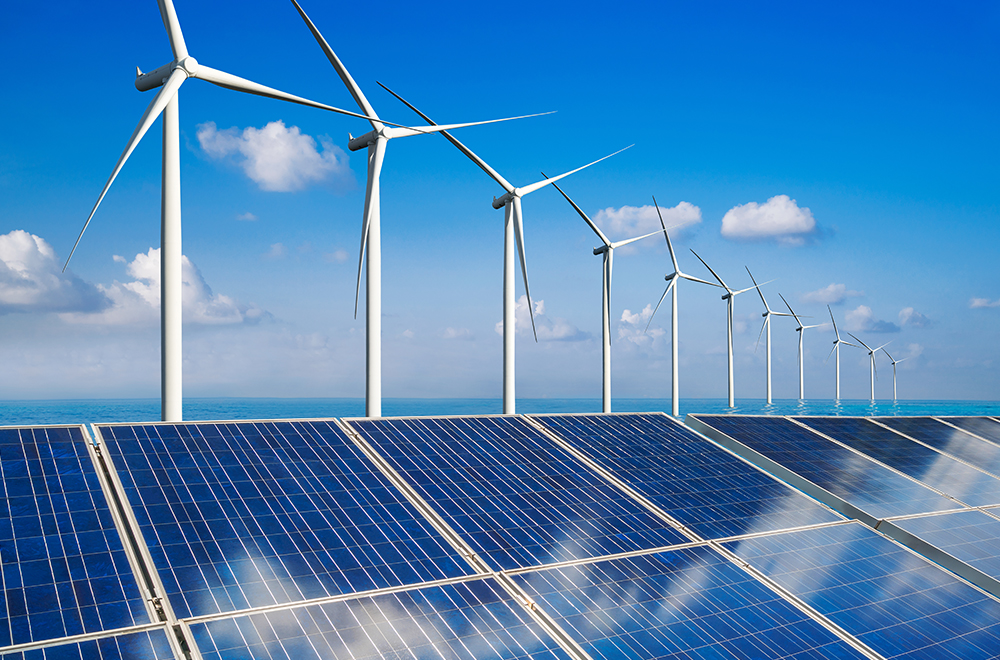
Wind power relies on wind turbines to convert kinetic energy from the wind into mechanical and renewable energy. This energy is then used to generate electricity through generators. Wind energy is a highly sustainable and widely available alternative energy source, experiencing rapid growth in popularity. Compared to the burning of fossil fuels, wind energy has minimal environmental impact and can be continuously harnessed.

Solar Energy:

Solar energy derives from the radiation and heat emitted by the sun. It is the cleanest, most abundant, and well-known alternative energy source. Solar energy can be utilized directly as heat or converted into electrical energy through two methods. The first method involves using solar cells to convert sunlight into electrical energy, while the second method employs solar heat to produce high-pressure steam, which drives generators.

Geothermal Energy:

Geothermal energy is a natural energy source generated from the heat stored beneath the Earth's surface. It is harnessed by using hot steam from production wells to drive electric generators. The remaining steam condenses into cold water in condensing towers and is returned to the reservoir for circulation and reuse. Geothermal energy is considered a clean energy source that does not pollute the environment, although its production costs can be relatively high due to the depth at which most energy sources are located.

Biomass Energy:

Biomass energy involves producing energy from organic matter and biomass materials derived from plants and animals. Examples include agricultural waste, wood waste, and community or industrial leftovers such as rice husks, bagasse, palm residue, and various husks and shells. Biomass can be converted into energy through processes such as burning wood waste for heat energy or fermenting manure to produce biogas, which can be further utilized for heat or energy production.

Harnessing the benefits of clean and alternative energy In modern times, clean energy and alternative energy offer various opportunities for heat production, transportation fuel, and electricity generation, serving as replacements for potentially depleted fossil fuels. They present cost-saving advantages and, most importantly, contribute to mitigating pollution and environmental issues. Clean and alternative energy can replace traditional energy sources indefinitely, as they are readily available in nature and can be continuously reused.

Advantages of using clean and alternative energy

  • Continuous Availability: Clean and alternative energy sources can be produced and utilized continuously without the fear of depletion.
  • Environmental Friendliness: These energy sources reduce the adverse impacts, pollution, and carbon emissions associated with fossil fuel processing, thereby mitigating global warming.
  • Economic Improvement: Utilizing clean and alternative energy sources can enhance a country's economic conditions by producing energy for internal consumption and creating job opportunities. It also distributes income among the population without jeopardizing sustainable livelihoods.
  • Stimulating Economic Growth: Promoting investment in clean and alternative energy sources can foster economic expansion and reduce reliance on foreign fuel imports. Countries can rely on domestically produced natural energy sources.
  • Environmental Preservation: The reduced use of petroleum energy helps prevent environmental problems and various forms of pollution.
  • Health Benefits: By reducing the negative effects of energy consumption, clean and alternative energy sources contribute to improved human health, minimizing unexpected health issues often associated with traditional energy sources.

Ref:

https://www.energy.gov/clean-energy
https://www.inspirecleanenergy.com/blog/clean-energy-101/types-of-alternative-energy
https://www.epa.gov/statelocalenergy/local-renewable-energy-benefits-and-resources
https://www.lung.org/blog/transitioning-clean-energy

Share this News:

555/2 Energy Complex Building B, 5th Floor, Vibhavadi – Rangsit Road, Kwaeng Chatuchak, Khet Chatuchak, Bangkok 10900.

  • Email: corporate@gpscgroup.com
  • Tel: 0 2140 4600
  • Fax: 0 2140 4601
  • Home
  • About Us
  • Our Business
  • Sustainability
  • Investor Relations
  • News & Media
  • Corporate Governance
  • Career
  • Contact Us
  • Cookies Policy
  • Data Privacy
  • Webmail
  • Procurement
  • GLOW
  • HHPC
  • CHPP
  • NUOVO PLUS

Copyright © 2021, Global Power Synergy Public Company Limited All rights reserved.

  • Sitemap
Follow Us