• Home
  • Data Privacy
  • Whistleblowing Measures
  • Procurement
  • Contact
  • Home
  • About Us

    GLOBAL BEST PRACTICE IN POWER BUSINESS

    • Corporate Info
      • Vision & Mission
      • Corporate Value
    • Milestone
    • Our Logo
    • Shareholder Structure
    • Management Structure
      • Organization Chart
      • Board of Directors
      • The Audit Committee
      • The Nomination and Remuneration Committee
      • The Risk Management Committee
      • The Corporate Governance and Sustainability Committee
      • Executive Team
    • Subsidiary and Associated Companies
    • Awards & Recognitions
    • EIA Reports
    VISION & MISSION
    BOARD OF DIRECTORS
  • Our Business

    GLOBAL BEST PRACTICE IN POWER BUSINESS
    • Business Portfolio
    • Combine Cycle / Cogeneration / Thermal
    • Renewable Energy
    • Other Business
  • Sustainability

    GLOBAL BEST PRACTICE IN POWER BUSINESS

    • Reporting
      • SD Report
      • Sustainability Performance Data
    • GPSC Sustainability
      • GPSC Sustainability Strategy and SDGs
      • Materiality Assessment
      • Corporate Sustainability Management Structure
      • Sustainability Framework
    • Economic
      • Governance, Risk Management and Compliance
      • Supply Chain Management
      • Evolving Business Model
      • Maintaining Availability and Reliability
      • Contribution to Associations
      • Tax Disclosure
    • Environmental
      • Environmental Management
      • Clean Energy Towards Net Zero
      • Biodiversity
    • Social
      • Corporate Social Responsibility
      • Employee-Focused Organization
      • Occupational Health and Safety
      • Human Rights
      • Customer Relationship Management
    • Stakeholder Engagement
    • Policy
    STAKEHOLDER ENGAEMENT
    Stakeholder Engagement
    SD REPORT
    SD Report
  • Investor Relations

    GLOBAL BEST PRACTICE IN POWER BUSINESS

    • IR Home
    • Financial Information
      • Financial Highlights
      • Financial Statements
      • MD & A
      • Credit Rating
    • Stock Information
      • Stock Quotes
      • Historical Price
      • Investment Calculator
    • Shareholder Information
      • General Information
      • Shareholder Structure
      • Shareholders' Meeting
      • Download Rights Offering Package
      • GPSC’S Site Visit
      • Dividend Policy & Payment
      • IR Calendar
    • Debenture Information
      • Debenture Information
      • Green Debenture Information NO.1/2020
      • Green Debenture Information NO.1/2022
    • Newsroom
      • SET Announcements
      • Press Releases
      • News Clippings
    • IR Calendar
    • Presentation & Webcasts
    • Analyst Coverage
      • Analyst Contact
      • Analyst Reports
    • Publication & Download
      • 56-1 One Report / Annual Report
      • Form 56-1
      • Factsheet
      • Prospectus
      • Quick Download
    • Information Inquiry & IR contact
      • IR Contact
      • Email Alert
      • FAQ
    STOCK QUOTE
    Stakeholder Engagement
    FINANCIAL STATEMENTS
    SD Report
  • News & Media

    GLOBAL BEST PRACTICE IN POWER BUSINESS

    • News
      • PR News
      • CSR News
    • Videos
      • Corporate Video
      • Project Videos
      • News Scoop
      • Knowledge Sharing
    • Energy Knowledge
  • Corporate Governance

    GLOBAL BEST PRACTICE IN POWER BUSINESS

    • Good Coporate Governance Policy and Code of Conduct
    • Internal Audit
    • Whistleblowing Measures
    • Contact Company Secretary
    • GPSC Group Way of Conduct Manual
  • Career
  • Contact Us
  • Data Privacy
Font
A+
A
Dark mode Light mode
Quick links
whistleblowing Procurement
Language :
  • TH
  • EN
Recommended Searches
  • Energy forecast
  • Careers
  • Annual Report
  • Energy Storage System
Quick links
whistleblowing Procurement
  • A+
    Increase Font
  • A
    Regular Font
  • Dark mode Light mode
  • TH
Back

Wind Energy

22 Feb 2023

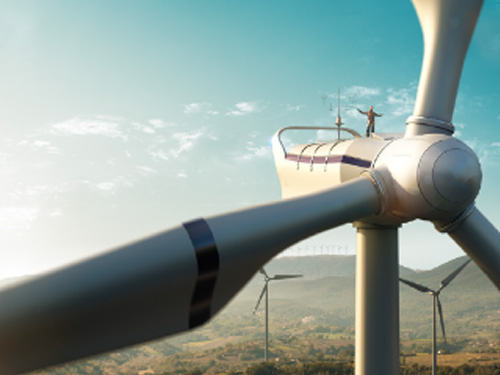
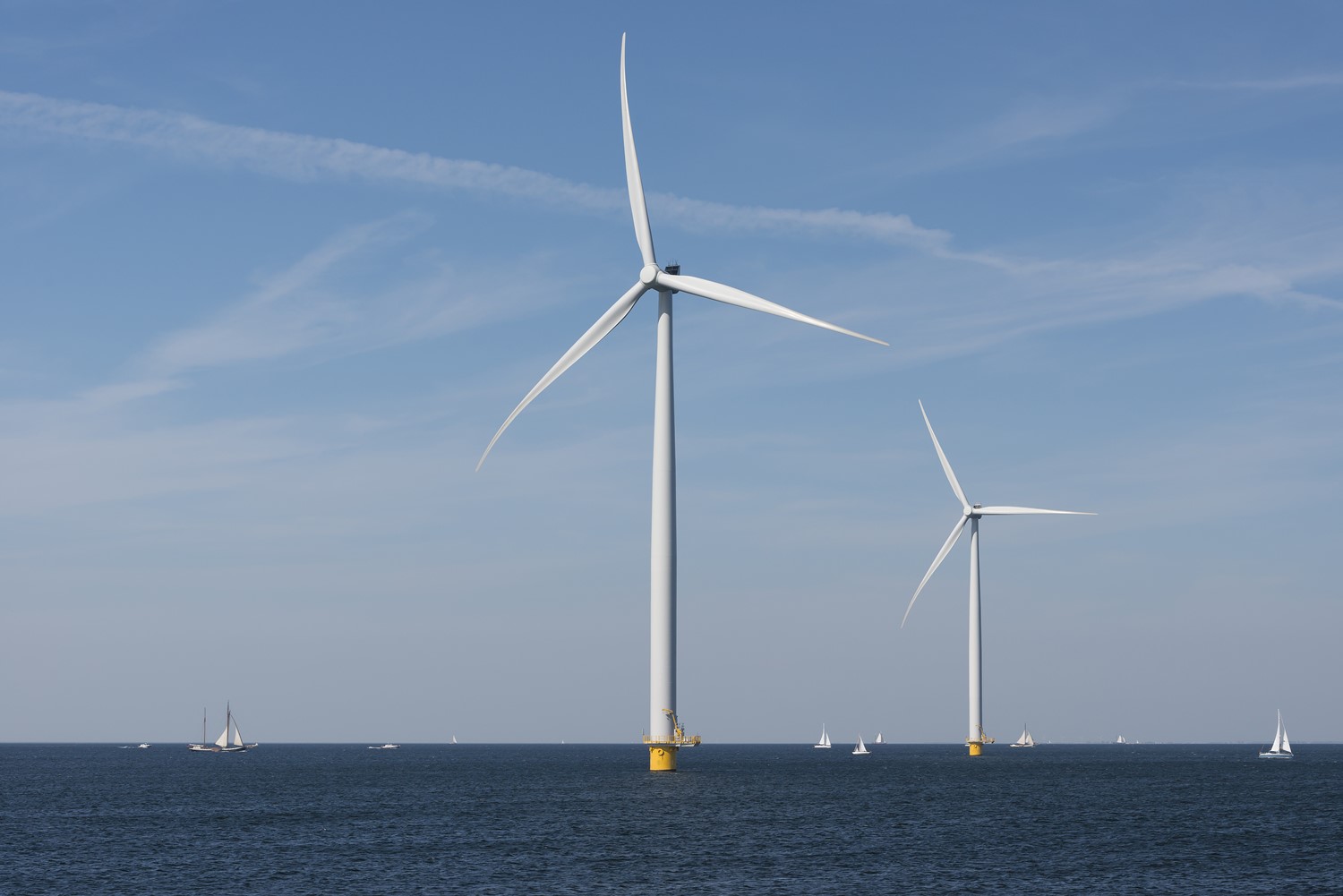
Wind energy is another clean energy or alternative energy. That all over the world is interested and wants to be used as renewable energy because wind energy can occur naturally. And there is no end of time, so it does not affect the environment. Wind energy is caused by the difference in temperature, air pressure and force from the rotation of the earth. These also determine the wind direction and wind speed.

Since wind energy is a naturally occurring and consistent form of energy, it has been adapted for use in various applications such as windmills, which rely on converting wind energy into mechanical energy for pumping water, milling grain, or kneading dough. Sails are also a device that utilize wind energy to propel boats. Moreover, nowadays people are increasingly interested in using wind energy to generate electricity through wind turbines, as it can help reduce carbon emissions and greenhouse gases from electricity production.

Wind Power Generation

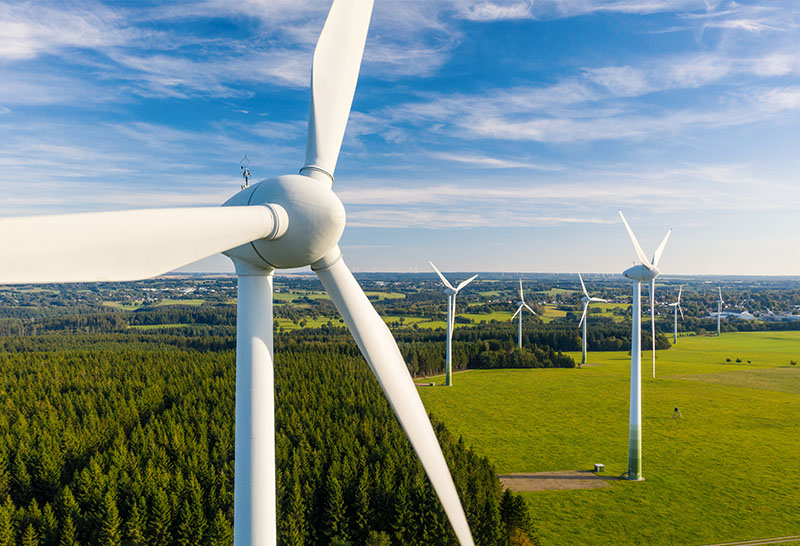
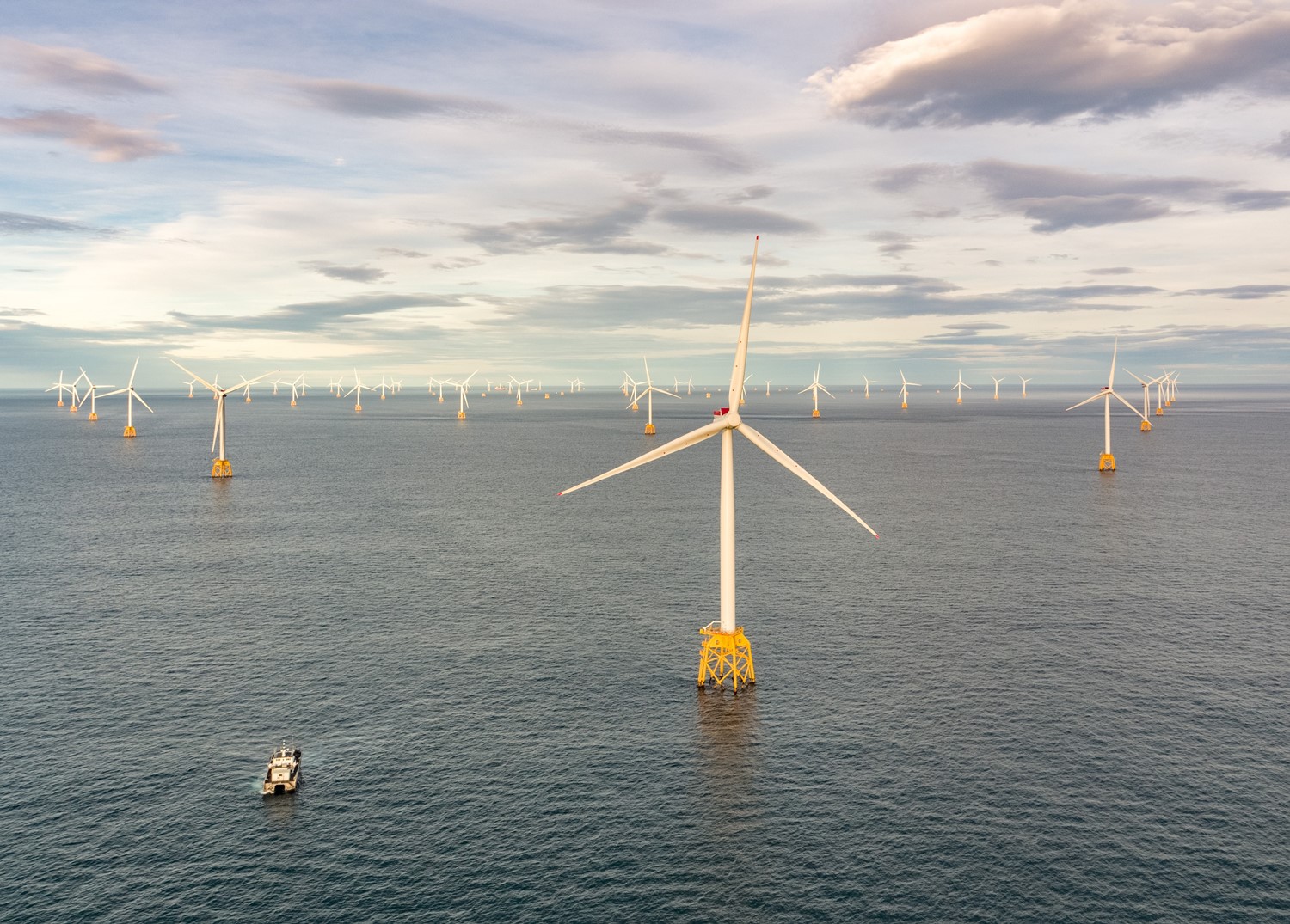
Wind power generation involves the use of machines called "wind turbines" to convert kinetic energy from wind movement into mechanical energy, which is then further utilized. To efficiently generate electricity, wind turbines require a constant or average wind speed of 6.4 - 7.0 meters per second at a height of 50 meters. Understanding wind turbine operation, types, and components is essential.

  • Wind Turbine Technology

    A wind turbine is a machine that converts wind's kinetic energy into electricity by connecting it to a turbine or dynamo. Wind turbines have been used since ancient Egypt and have been developed over time using knowledge from various engineering fields to maximize the benefits of wind energy.

  • Types of Wind Turbines

    • Vertical Axis Wind Turbine

      The axis of rotation and blades are perpendicular to the horizontal wind movement.

    • Horizontal Axis Wind Turbine

      The axis of rotation is parallel to the horizontal wind movement, with propellers perpendicular to the wind.

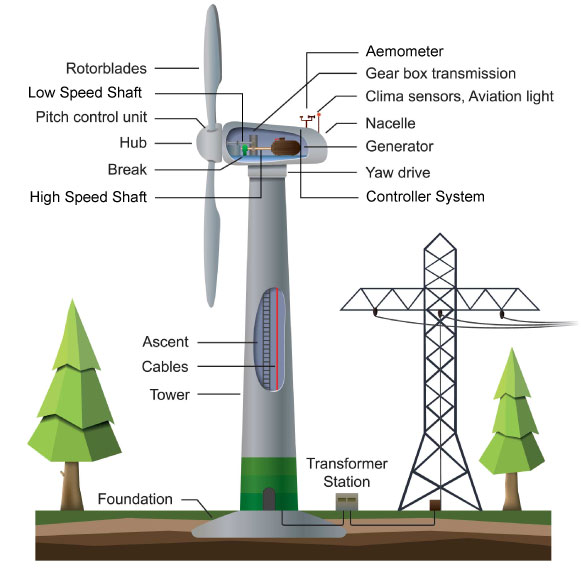
Components of a Wind Turbine for Electricity Generation

  1. Propeller (Blade): Receives kinetic energy from wind movement and rotates the spindle to transmit power to the main spindle shaft.
  2. Spindle Shaft (Shaft): Consists of the main spindle shaft (Low-Speed Shaft) and the small spindle shaft (High-Speed Shaft). The main shaft receives force from the propeller and transfers it to the gearbox, while the small shaft receives high-speed force from the gearbox to rotate the generator.
  3. Gearbox: Adjusts and controls the rotational speed between the main spindle shaft and the small spindle shaft.
  4. Generator: Converts mechanical energy into electrical energy.
  5. Brake System: Controls and stops the rotation of the wind turbine blades and spindle shaft during maintenance.
  6. Electric Control System (Controller System): Acts as a computer-based control system and power supply for the turbine.
  7. Yaw Drive (Neck Spindle): Controls the rotation of the turbine based on wind direction through electronic systems connected to the rudder.
  8. Wind speed and direction meter(Anemoter and Wired Vane): Measure wind speed and direction, connected to a computer. Installed outside the machine room.
  9. Pillar (Tower): Supports the wind turbine components and includes impeller pivots and the engine room at the top.

The Potential of wind energy in Thailand's Climate

Thailand, situated in the equatorial region, experiences three types of winds that are relevant to its climate:

  1. Annual Wind: This wind is caused by consistent atmospheric pressure throughout the year. Areas with low air mass due to hot air rising are known as low-pressure areas, while areas with high air mass due to sinking cold air are referred to as high-pressure areas. The movement of air between these areas generates annual winds.
  2. Seasonal Wind: These winds occur over large areas and persist for an extended duration during each season. They are commonly known as monsoon winds and can be categorized into two types: the southwest monsoon or summer monsoon and the northeast or winter monsoon.
  3. Periodic Wind: This wind occurs due to short-term variations in air pressure between two areas. Examples include land breeze, sea breeze, mountain breeze, and valley breeze. Coastal regions, influenced by highland winds and sea breezes, experience these periodic winds.

While the annual wind in Thailand is not useful for harnessing wind energy, the northeast and southwest monsoon winds are significant. These winds blow consistently in a specific direction for prolonged periods throughout the seasons and years. The central highlands and coastal areas are the primary regions where these winds prevail. The average wind speed in these areas ranges from about 5 to 7 meters per second.

Advantages of wind power

  • Clean and environmentally friendly energy that helps reduce greenhouse gases, the main cause of global warming.
  • Endless source of energy.
  • Pollution-free compared to fossil fuel power plants and nuclear power plants.
  • Quick construction of wind farms and installation of wind turbines, saving construction time.
  • Wind power generation is cheaper than nuclear power for producing the same amount of electricity.
  • Wind turbines have powerful working efficiency and require less maintenance budget.
  • Government support for wind power generation, including incentives for small or very small power producers. The increase in purchasing power produced from wind energy is set at 2.50 baht per unit in 3 provinces. Additionally, the southern border offers a special rate ranging from 1.50 to 4.00 baht per unit for a duration of 10 years.

Limitations of Wind Power

  • Visual Impact: Wind turbines are large structures that can obstruct the scenic beauty of the areas where they are installed.
  • Noise Pollution and Interference: Wind turbines can generate noise and radio interference, which can be disruptive to people living in the vicinity.
  • Low Wind Speed: In Thailand, the wind speed is relatively low, which can affect the efficiency of wind power generation.
  • Dependence on Weather Conditions: The strength of the wind varies with weather conditions, and there may be seasons with little to no wind, making it challenging to maintain a consistent power output.
  • High Cost of Energy Storage: The batteries used to store energy in wind turbines can be relatively expensive.
  • Lack of Suitable Technology and Expertise: There is a lack of technology and expertise specifically tailored to the wind potential in Thailand, hindering the further development and utilization of wind power.

The Future of Wind Power in Thailand

The future of wind power in Thailand is well underway, with ongoing efforts to develop efficient and suitable wind turbine technology that aligns with the country's wind energy potential. These initiatives include promoting government sector investments, leading to the successful development and establishment of numerous businesses focused on generating electricity from wind energy. According to the Department of Alternative Energy Development's report on renewable energy power plants as of January 2022, a total of 29 wind power plants have been supplying electricity to the system (OCD) across Thailand.

Projects related to wind energy from GPSC

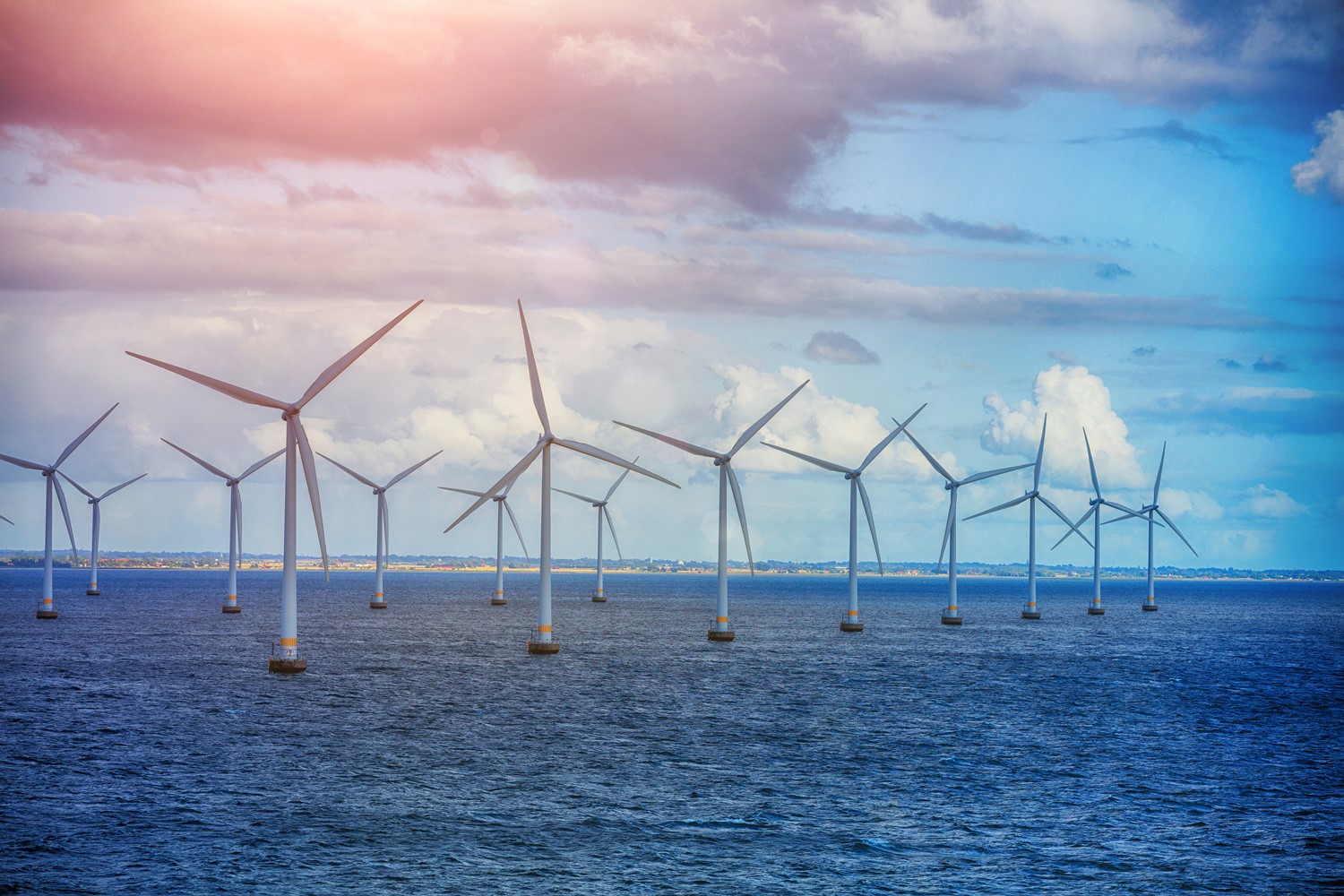
Of course, GPSC, as a leading power company that focuses on global sustainability and is committed to investing in electricity generated from renewable energy to achieve Thailand's net zero emissions goal. The company by the year 2060 has foreseen the potential of wind energy as well. Therefore, on July 14, 2021, Global Renewable Synergy Company Limited (GRSC), 100% owned by Global Power Synergy Public Company Limited (GPSC), has entered into an agreement . Joint venture with Copenhagen Infrastructure Partners (CIP) in the Copenhagen Infrastructure II K/S (CI-II) and Copenhagen Infrastructure III K/S (CI-III) funds.to cooperate in the Changfang and Xidao offshore wind power projects in Taiwan, because we believe that Taiwan has the world's leading potential and progress in clean energy and has the same goal as the GPSC group that wants to push forward Developing clean energy for a sustainable environment.

On November 29, 2022, GPSC has signed a joint venture agreement to develop wind power projects with CIP again through the Copenhagen Infrastructure New Markets Fund I.(CI NMF I)This time, it is the establishment of a joint venture company to move forward in the wind energy business. By focusing on wind power plants in the country, CIP is ready to transfer knowledge on technology and innovation related to wind energy directly to GPSC and Thailand for use in further development of wind power generation in Thailand.

Data source :

  • Association of Renewable Energy for Communities of Thailand
  • National Geographic (Thai version)
  • Energy News Center (ENC)
  • GPSC : join hands with CIP group to set up a joint venture company Penetrating the wind energy business Aiming to be a leader in Thailand
  • GPSC: Holds 25% stake in wind power in Taiwan Increase the proportion of renewable energy by another 149 megawatts.

Share this News:

555/2 Energy Complex Building B, 5th Floor, Vibhavadi – Rangsit Road, Kwaeng Chatuchak, Khet Chatuchak, Bangkok 10900.

  • Email: corporate@gpscgroup.com
  • Tel: 0 2140 4600
  • Fax: 0 2140 4601
  • Home
  • About Us
  • Our Business
  • Sustainability
  • Investor Relations
  • News & Media
  • Corporate Governance
  • Career
  • Contact Us
  • Cookies Policy
  • Data Privacy
  • Webmail
  • Procurement
  • GLOW
  • HHPC
  • GETZ
  • NUOVO PLUS

Copyright © 2021, Global Power Synergy Public Company Limited All rights reserved.

  • Sitemap
Follow Us